From Planning to Implementation: Taking an Integrated Approach to SS4A
Over the past three years, the U.S. Department of Transportation has awarded nearly $3 billion in federal funding as part of the Safe Streets and Roads for All (SS4A) competitive grant program. Communities across the country are now working to develop and implement comprehensive safety action plans (Action Plans).
In the below article, Community Planning/Complete Streets Group Manager Demian Miller explains the importance of taking an integrated approach to developing and implementing Action Plans.

As a transportation planner and project manager with over two decades of experience, I’ve learned that the most effective roadway safety improvements come from an integrated approach—one that brings together roadway and traffic engineering, systems planning and analysis, program management and public engagement. This leads to plans that are more efficiently implemented and designs that are tailored to the area’s unique safety challenges.
Planning for Zero
The development of an Action Plan should be a collaborative undertaking that challenges all involved to think differently about traffic safety and traditional roles and responsibilities. To reach the eventual goal of zero roadway fatalities and serious injuries, it’s important to bring in multidisciplinary expertise early.
At Benesch, we’ll often have various experts from around the country share their unique expertise, fresh ideas and practical experience. By leveraging our firm’s roadway design, construction management, public finance and community planning expertise during the planning phase, we are able to confidently say that the strategies we recommend are feasible and that the implementation process is thoroughly understood.
Designing the Infrastructure
One of the key components of a successful Action Plan is the selection of projects and strategies that will address the unique safety issues of a given community. While lower-cost, systemic solutions are typically part of the strategy toolkit, our plans also include spot improvements such as intersection realignments, new or alternative signal control, or new bicycle and pedestrian facilities. Because the feasibility of these sorts of improvements require more insight into the design process, it is important to work with designers that have a keen understanding of your goals and know how to design through both safety and constructability lenses.
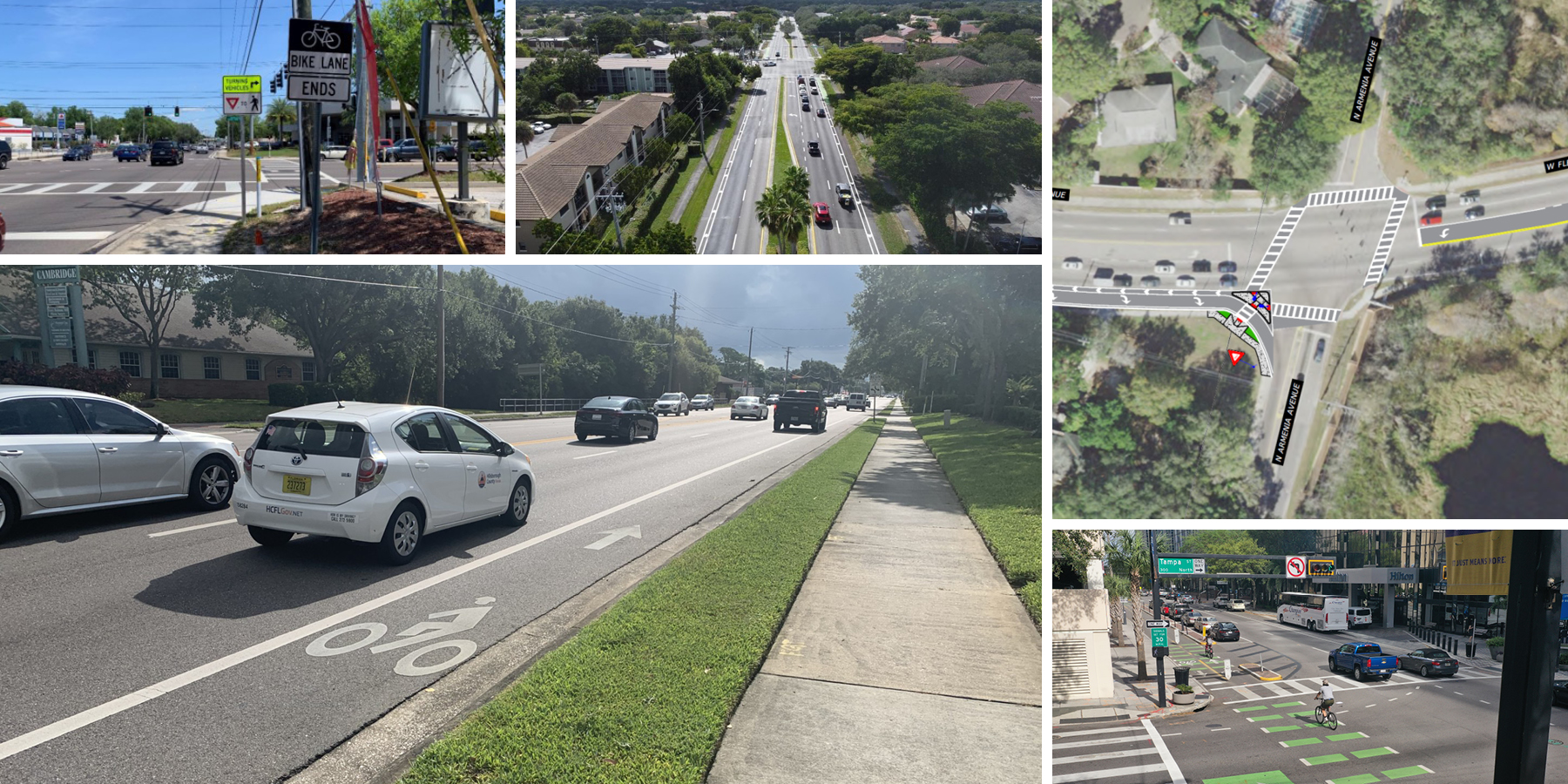
This integrated approach was pivotal for Benesch’s work on several Vision Zero corridor studies in the Tampa, FL metro area as part of the Hillsborough TPO’s Vision Zero implementation planning efforts. After the County reviewed the study recommendations, they tasked Benesch with designing the recommended short- and medium-term improvements. Being involved in the planning and now in the design allows us to better ensure our solutions are in line with the overall goals of the Vision Zero planning efforts.
While not part of an SS4A funded project, our work on 24th Street in Omaha, NE is another great example of how an integrated approach comes into play when improving roadway safety. With a high rate of vehicular crashes and increasing pedestrian and bicycle traffic on 24th Street, the City of Omaha engaged Benesch to help improve safety, enhance pedestrian accommodations and optimize traffic operations. We provided analysis, planning, public outreach, design and construction engineering for this three-mile corridor improvement. Our team brought together the professionals needed to understand the many facets and elements interacting in the street environment, then created a solution to optimize and enhance this corridor.
Overall, Benesch’s multidisciplinary approach for both the planning and implementation of Safety Action Plans has enabled us to better help communities not just work to eliminate traffic-related deaths but also to increase healthy and equitable mobility for road users of all abilities.
To keep up with the latest news and insights from our experts, follow Benesch on LinkedIn.