Leveraging Grant Funding to Improve System Resiliency
Across the United States, aging wastewater infrastructure is reaching the end of its service life, prompting municipalities to plan for significant repair and replacement projects. Securing grant funding is a critical strategy for communities seeking to improve the resilience of their collection systems while managing costs.
In this article, Municipal Team Leader Sunny Mullen shares lessons learned from the Copper Creek Sewer Interceptor Relocation project in Bellevue, Nebraska (a suburb of Omaha) to provide valuable insights to municipalities looking to fund complex wastewater infrastructure projects.
Meet Our Expert

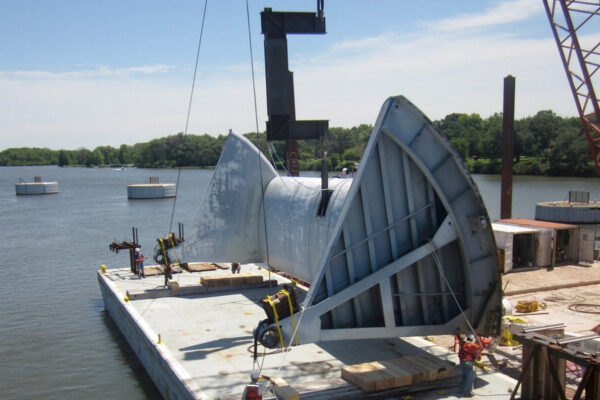
In early 2020, the City of Omaha engaged Benesch to evaluate options for rehabilitating or replacing a 90-inch steel aerial sewer crossing over Copper Creek. The existing infrastructure, constructed in the early 1970s, showed signs of deterioration and had suffered previous damage from storm events. These vulnerabilities increased the risk of service loss and potential environmental violations, as a failure could result in sewage entering local waterways.
Benesch identified a solution that would extend the service life of the interceptor, reduce the risk of damage from high water events, improve maintenance access, enhance aesthetics and protect the integrity of the levee system. Because the solution would improve the system’s resilience, the project qualified for both state and federal grants, securing a total of $26.1 million in grant funding.
As a result of our work on this project, we gained a comprehensive understanding of the grant application process and how federal and state grant funding can impact a project.
Key Insights
Benesch led the project from concept through to completion. This involvement gave us valuable insight into the grant funding coordination and implementation process. Explore the lessons learned that will be valuable to municipalities looking to fund complex wastewater infrastructure projects.
Take time to gain a complete understanding of the funding application process, requirements and funding structure. The process can be complex and extend over multiple years. Taking the time at the start for the proper grant due diligence and comprehension will aid in communicating accordingly, tempering expectations, scheduling accurately and planning appropriately.
Plan for additional time for FEMA Environmental and Historic Preservation (EHP) reviews if the project is part of a FEMA-funded program, and for NEPA reviews, especially if it is a federally funded project. Additionally, allocate sufficient time for other environmental and permitting agencies to review the project as their acceptance is required with most projects.
Track expenditures for grant reimbursement with a systematic approach. In addition to the standard quarterly reports and reimbursement requests to track expenditures, we found it incredibly valuable to create a separate budget summary tracker for all expenditures being submitted for reimbursement, broken out by milestone activity, project task, invoice, grant phase and period of services.
Detailed documentation is necessary from the start of the application process through construction and closeout. Whether you are applying for local, state or federal grants, understanding the specific paperwork needed and submitting accurate and thorough documentation will prevent miscommunication, delays and potential loss of the grant opportunity.
Owners should consider having internal backup plans for funding. A lot can happen to drive up project costs from the time that a grant is awarded to project completion. Understanding alternative funding options will make it easier to find ways to cover additional costs that may occur.
By adopting a holistic approach and learning from successful models like Copper Creek, communities can secure the resources needed to deliver resilient infrastructure solutions that protect public health, enhance quality of life and safeguard the environment for future generations.
Learn more about Benesch’s services here and follow us on LinkedIn for first access to our insights articles.